
Safeguarding WFR habitats
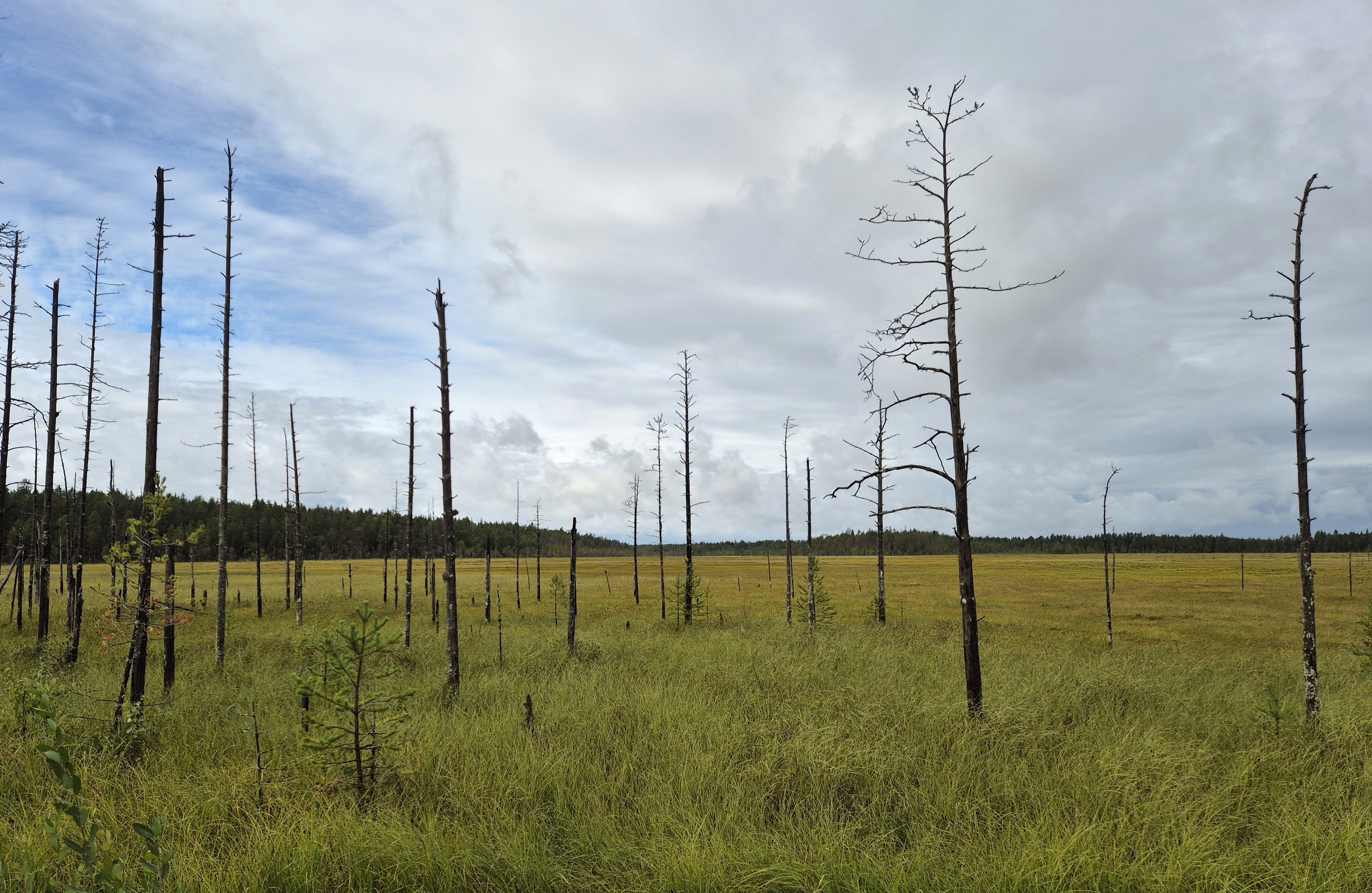
The WFR is a species that prefers in a mosaic-like landscape of bogs, mature or old-growth forests, bodies of water, and lichen-rich eskers. In areas with human activity, the WFR can also utilize managed forests and even cultivated areas. However, especially during the calving and calf nursing period, females with young calves prefer remote and natural or near-natural wetland areas. They avoid anthropogenic disturbances such as forest roads. During winter, WFR are dependent on lichen pastures.
In this part of the project, we will improve our understanding of the wild forest reindeer’s landscape use and habitat requirements, and refine this knowledge into an easily accessible and understandable format. In addition, we will restore 100 hectares of summer habitat suitable for the wild forest reindeer in Tiilikkajärvi National Park and the surrounding areas. This part is led by the Natural Resources Institute Finland (Luke).
We will start the work by gathering existing knowledge on the habitat requirements of wild Rangifer subspecies. In addition, we will continue utilizing the extensive GPS collar data collected during the WildForestReindeerLIFE project (2016–2023) project by producing predictive maps of suitable habitat for the WFR. We will compile information on WFR habitat requirements and habitats into a report (in Finnish), which will be published during 2027 and updated in 2032. In addition, we will produce a predictive map to illustrate the subspecies’ key winter grazing areas. The similar map about the calf nursing habitats was produced in the WildForestReindeeLIFE project (metsa.fi, in Finnish). The Natural Resources Institute Finland (Luke) is responsible for this part of the project.
Ground lichen pastures (mainly rganizet.) are the most important winter food resources for WFR. WFR can also use arboreal lichens (rganizet.) growing in aged and old forests, but in habitats modified by forestry, their importance is negligible due to very low biomass. In this project, we will map the ground lichen pastures and the inventory their lichen biomass using the methods developed for the reindeer husbandry area in Fennoscandia. Further, we will evaluate the carrying capacity of present and potential new wintering areas for WFR in Finland by using the bioeconomic system model developed for studying the sustainable use of pastures in the semi-domestic reindeer herding. The report about wintering areas will be published in 2029 together with a GIS layer presenting the location and condition of ground lichen pastures in the present and potential new WFR ranges. The Natural Resources Institute Finland (Luke) is responsible for this part of the project.
We will bring the produced information on WFR habitat requirements and the locations of important habitats by implementing training sessions for authorities and environmental consultants working on land-use projects. During the project, we will organize a total of six full-day training sessions. In addition, we will organize separate training sessions for forestry professionals working in the wild forest reindeer range. The produced material and recorded lectures will be published online and saved in the Educational network for biodiversity, established by the Priodiversity-LIFE-project. There, the materials will be easily available for biodiversity professionals and stakeholders. Metsähallitus Parks & Wildlife Finland is responsible for this part of the project.
Last updated 18 May 2026