
Protecting the WFR genome
Wild forest reindeer (Rangifer tarandus fennicus) and semi-domestic reindeer, domesticated from the mountain reindeer (R. t. tarandus), are subspecies of the reindeer that is widespread across the Northern Hemisphere. They can interbreed and produce fertile offspring. Hybridisation threatens the WFR genome.
WFR and semi-domestic reindeer coexist in Kainuu. Preventing their mixing and rganizetion relies largely on the so-called WFR fence built along the southern border of the reindeer herding area in the 1990s, as well as on removing animals that cross to the wrong side of the fence and on field monitoring. In North Ostrobothnia, the risk of mixing and rganizetion is a new phenomenon, resulting from the spread of the Suomenselkä WFR subpopulation towards the reindeer herding area.
In the LIFEline4Fennicus project, we will develop and implement measures to keep WFR and semi-domestic reindeer separate in North Ostrobothnia. These measures include enhanced monitoring of both subspecies, closer cooperation with local reindeer herding cooperatives, and a so-called WFR herding trial. In this trial, WFR that have moved into the reindeer herding area will be encouraged and/or pressured to leave the area, in cooperation with local reindeer herders.
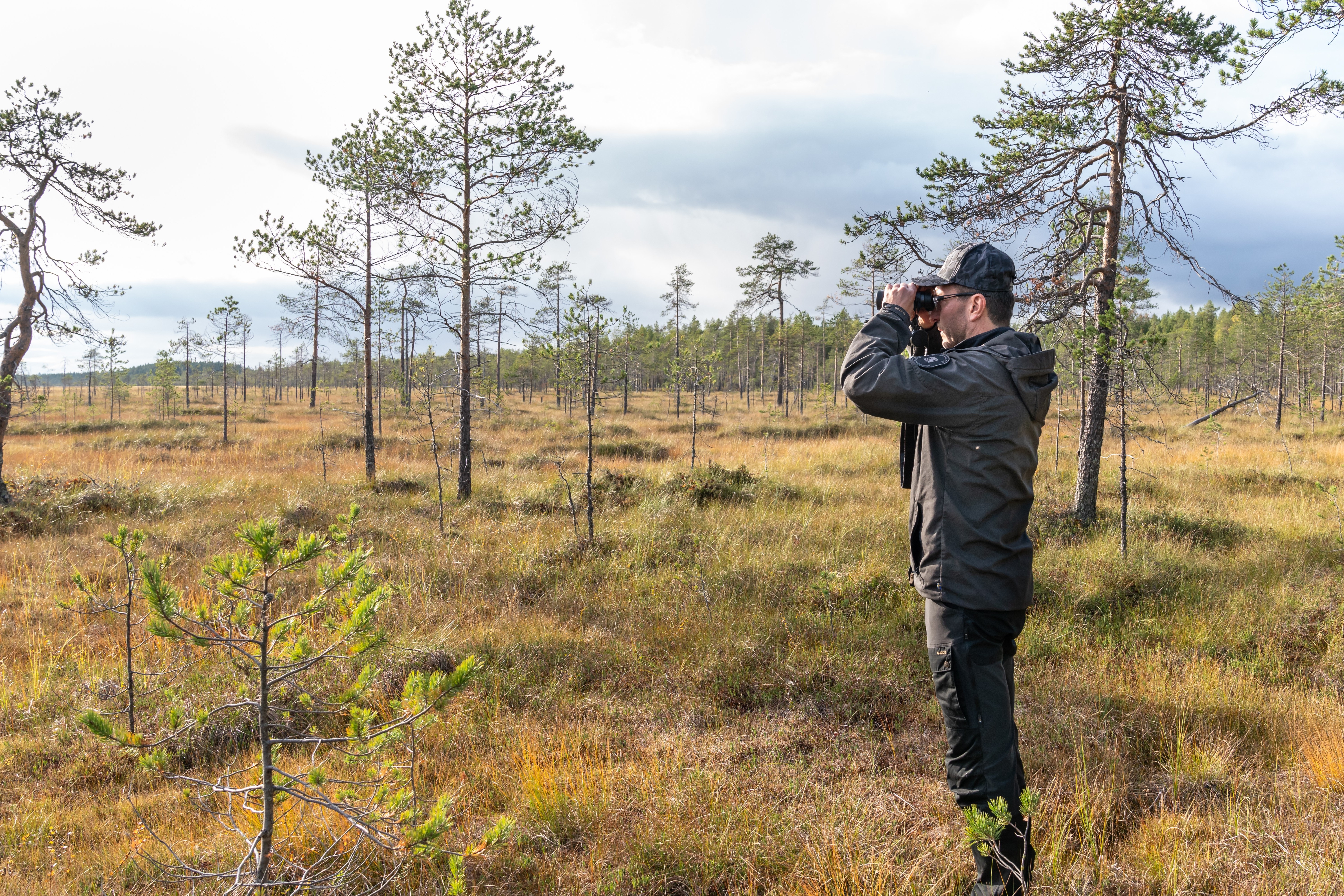
WFR and semi-domestic reindeer can usually be distinguished based on their appearance and behavior, and an experienced observer may also be able to spot their hybrid. However, subspecies status is not always clear, and sometimes only hair or tissue samples are available for examination. Then, with a DNA sample, hybrids can be identified reliably. However, at the moment, the methods in use are more complex than needed for subspecies identification and are also slow, because samples must be sent to laboratories abroad for analysis. That is why the LIFEline4Fennicus project is developing a simpler and faster method, which can reduce the time needed to confirm subspecies status from months to, at best, just a few days.
Metsähallitus Parks & Wildlife Finland is responsible for this part of the project. The Natural Resources Institute Finland (Luke) contributes by monitoring WFR and by developing a DNA tool.
A new WFR fence of approximately 72 km is being built in North Ostrobothnia and is expected to be completed during 2027. Building the fence is not part of the LIFEline4Fennicus project, but once completed it will support the project’s objectives.
Last updated 18 May 2026