
Preserving genetic diversity
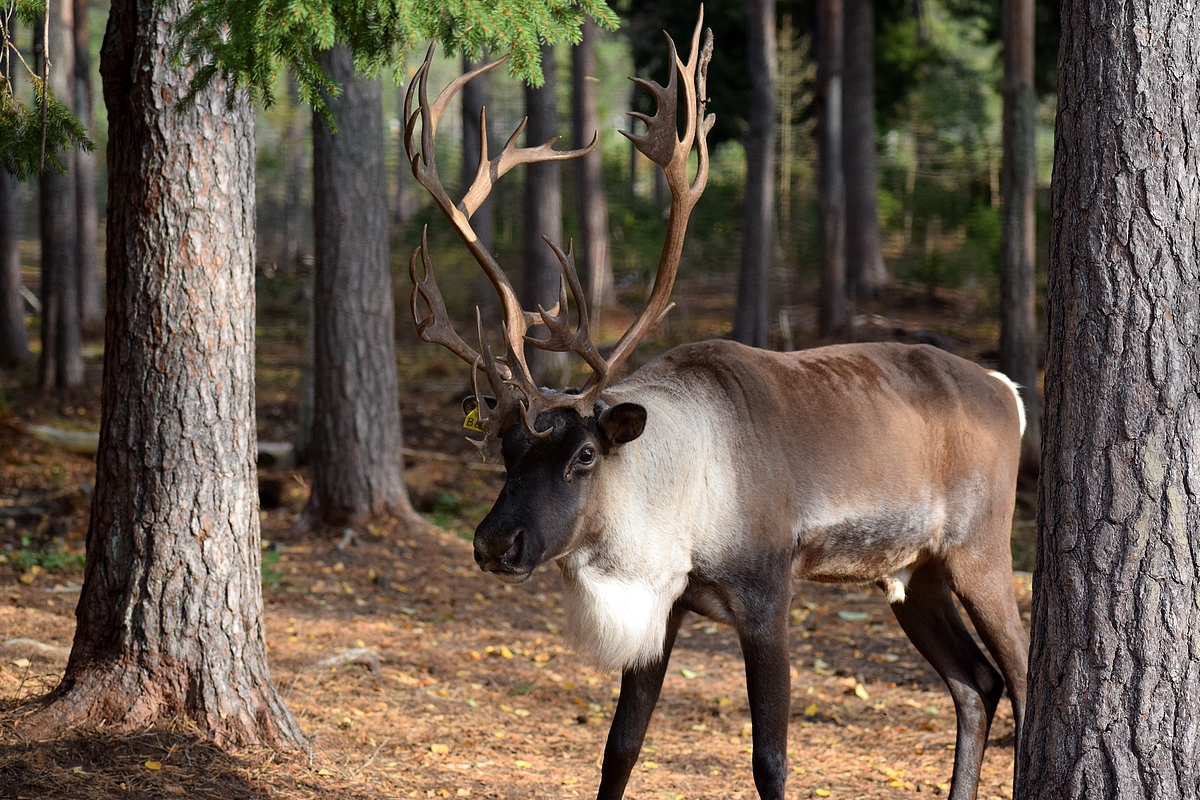
The ex situ WFR population was established in the 1970s, when wild forest reindeer captured in Kainuu were brought to Finnish zoos for breeding. Since then, their offspring have also been transferred to other zoos in Europe. Maintaining genetic diversity in the zoo population is essential if zoo-born animals are to be used to support WFR in the wild.
The European zoo population originally descends from just seven WFR, and one additional wild individual was added in 2004. Genetic diversity improved further during the WildForestReindeerLIFE project, when six wild males captured for the Lauhanvuori and Seitseminen breeding enclosures were later transferred to zoos. These males adapted well in zoo environment and have already produced more than 40 offspring, with some first-generation offspring now breeding as well. Some offspring remain in Finnish zoos, some have been moved to other European zoos, and some have been used to support the reintroduced Lauhanvuori subpopulation.
In LIFEline4Fennicus, the zoo population will continue to be strengthened by adding wild males. The goal is to move all males captured for the Lauhanvuori breeding enclosure (three individuals in total) to zoos after one or two breeding seasons.
The project will also launch something entirely new: a WFR gene bank and the development of assisted reproductive technologies, such as artificial insemination and in vitro embryo production. The gene bank will store WFR gametes and embryos. The material is frozen and kept in liquid nitrogen, where it can remain viable for decades – potentially even hundreds of years. Reliable assisted reproductive technologies are needed so that this stored genetic material can be used to support living WFR populations when needed.
Assisted reproductive technologies can also help maintain genetic diversity in the zoo population, because in some cases moving animals between zoos can be replaced by moving gametes. The gene bank also acts as an insurance policy: if WFR subpopulations were lost, for example due to an infectious disease, the subspecies’ genetic material would still be preserved.
During LIFEline4Fennicus, we will also estimate the effective population size and inbreeding coefficient of WFR. These indicators help us understand the genetic status of each subpopulation and plan future conservation actions more effectively – for example, how many new individuals are needed for the zoo population, or whether conservation translocations between subpopulations could be beneficial.
This part of the project is led by the Natural Resources Institute Finland (Luke). Korkeasaari Zoo, Ranua Wildlife Park, and Metsähallitus Parks & Wildlife Finland contribute by supporting animal handling and care, as well as sample collection.
Last updated 18 May 2026