Research data on the movements of the Baltic Gull provides essential insights into the responsible planning of offshore wind development. The ecological surveys and GPS tracking commissioned by Metsähallitus help identify the species’ key feeding areas, flight altitudes and movement corridors – information that is critical when offshore wind power is developed in a way that respects biodiversity and supports long term sustainability. In this article, ornithologist Martin Hedén explains the monitoring work carried out in the project area and how field research contributes to the sustainable expansion of offshore wind energy.
As the project developer, Metsähallitus is responsible for extensive environmental studies included in the project’s Environmental Impact Assessment program and commissions these studies from the environmental consultancy Sitowise. One of the key focus species is the Baltic Gull, a globally threatened seabird whose breeding range extends from the east coast of Sweden across Finland to the White Sea.
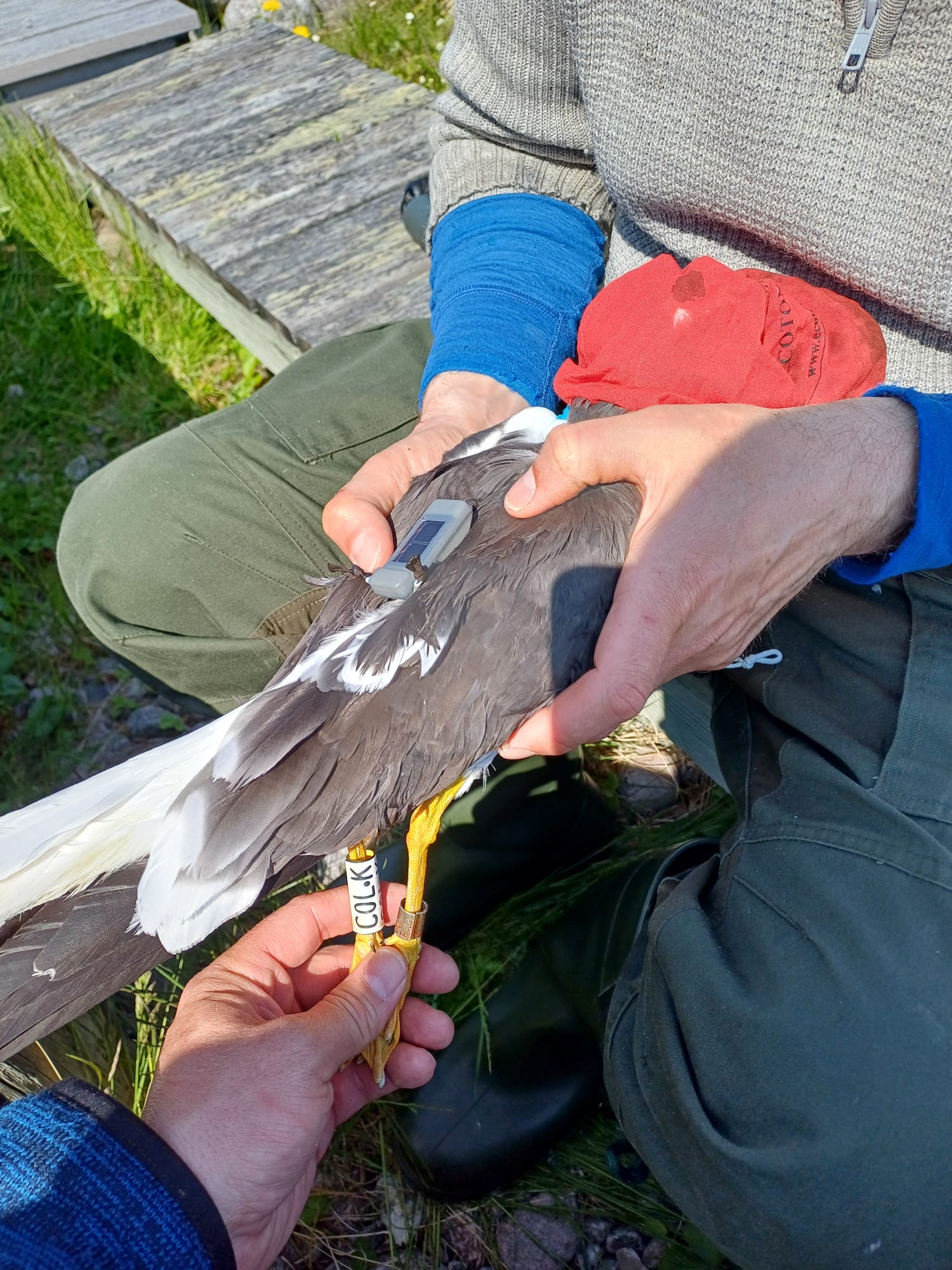
“The Baltic Gull is classified as globally threatened on the IUCN Red List. The global population is estimated at fewer than 20,000 pairs, breeding from the Swedish east coast through Finland to the White Sea. Approximately 75% of the world population is evenly distributed between Sweden and Finland. After the breeding season, the birds begin their long migration to their wintering grounds around Lake Victoria and East Africa,” says Martin Hedén.
High‑resolution tracking data reveals detailed movement patterns
The behaviour of the Baltic gull has been examined by equipping six adult birds breeding on Maakalla and Ulkokalla with lightweight, solar‑powered Ornitela transmitters in 2025. An additional six birds were tagged north of Raahe. The species is one of the designated conservation features of the Natura 2000 area in the Raahe archipelago, and understanding its movements, breeding success and behaviour is essential for safeguarding the area’s natural values and for assessing the environmental impacts of offshore wind power. The transmitters record the birds’ location, flight altitude and speed at five‑minute intervals, providing detailed information on their daily movement patterns.
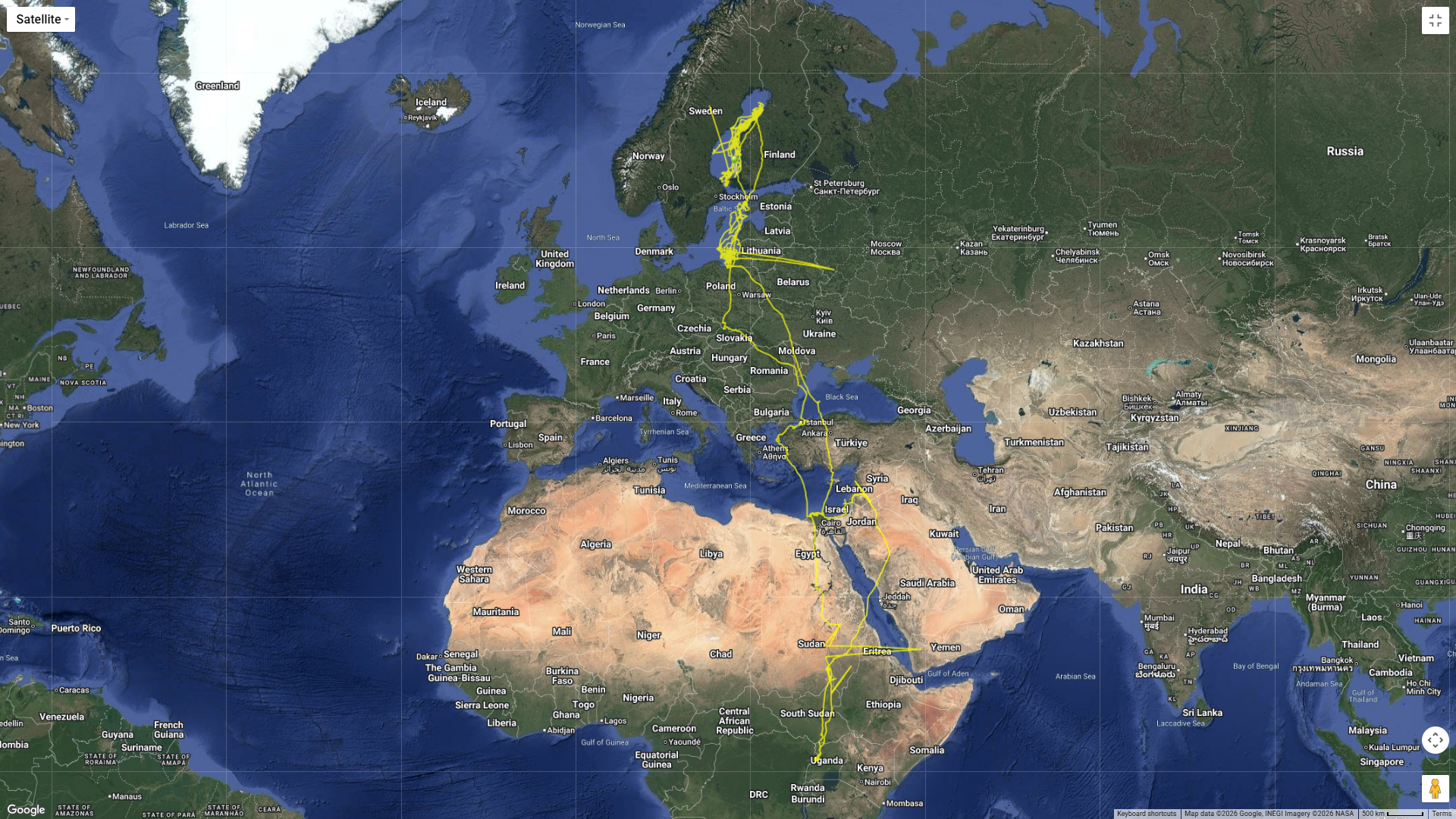
GPS monitoring is carried out in cooperation with the project developer of the Maanahkiainen project. The projects exchange research data and divide the survey areas to avoid overlapping fieldwork. This collaboration significantly reduces human presence within the gull colony, as both project developers can rely on shared data rather than conducting separate visits to the same sites. The birds have been monitored throughout the breeding season as well as during their migration to East Africa and back. All individuals survived the long migration, and data from the second monitoring season is now available.
What the results show
Understanding Baltic gull’s foraging areas, flight routes and flight altitudes is essential for planning offshore wind projects in a way that minimizes impacts on birdlife. This knowledge helps ensure that turbines are sited as safely as possible and that offshore wind development supports both renewable energy goals and biodiversity conservation.
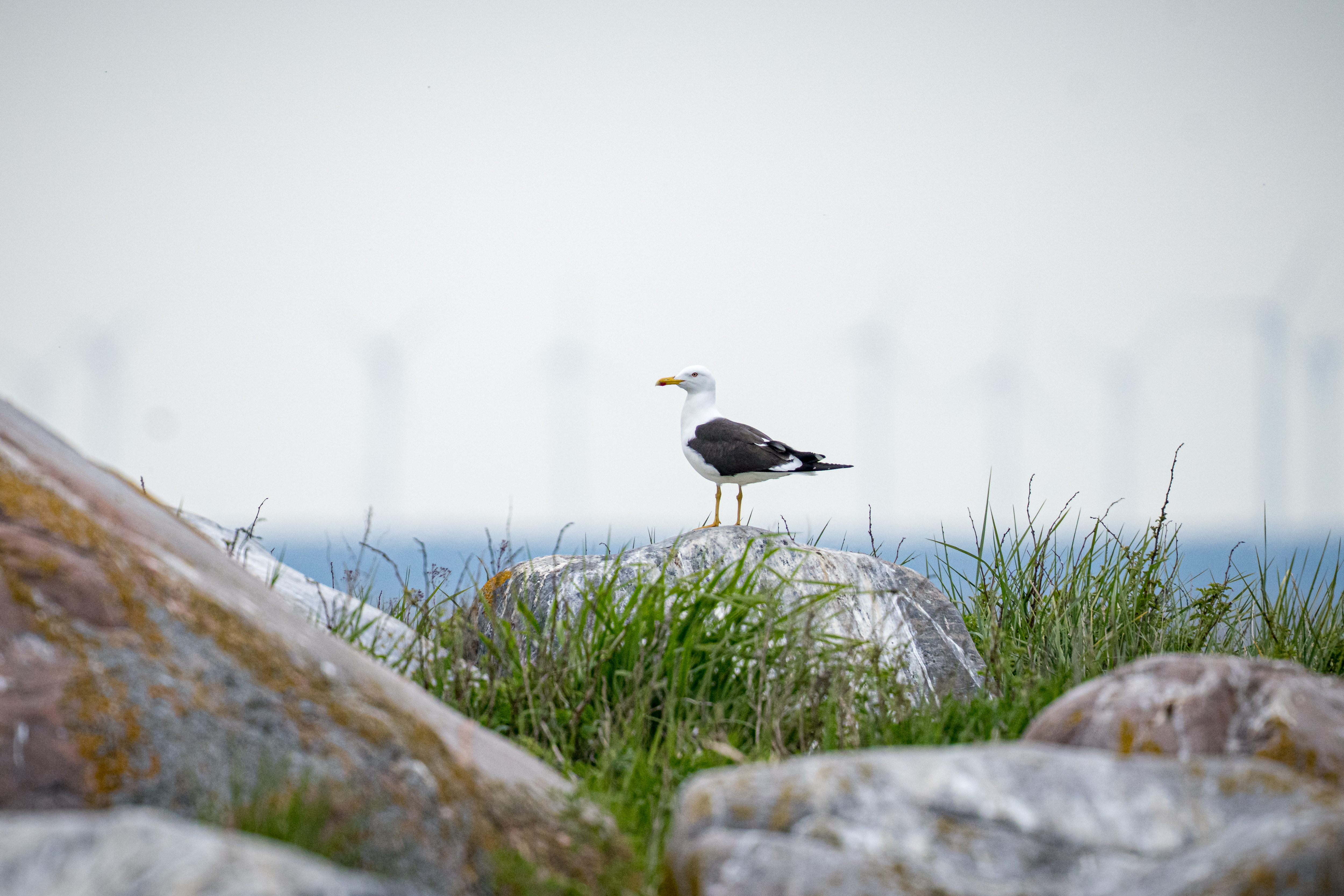
“The Baltic gull is studied in this project due to declining population and their feeding behavior. It is a highly pelagic species that regularly feeds up to 100 km from the nest and flies very long distances on most days. Since there is a colony on Maakalla and a smaller one on Ulkokalla, it is vital for the planning process to understand where the main feeding areas are and which areas the birds use more or less, in order to avoid risks. Flight heights in different areas are also an important factor”, says Martin Hedén.
Analysis of the 2026 breeding season will be completed later, further refining the overall understanding of the species’ behavior. These findings support Metsähallitus’ commitment to developing offshore wind power responsibly and in line with nature.
A pelagic species is a species that lives and moves primarily on the open sea, far from coasts and the mainland. The word comes from the Greek pelagos, meaning open sea.
Pelagic species:
- spend most of their time at sea
- forage far from the coastline
- can travel very long distances each day
The Baltic gull is a good example: it can forage up to 100 kilometers from its nest and spends much of its time on the open sea.