Regional LUMO programs speed up the halting of biodiversity loss
This text was published in the blog of Priodiversity LIFE. Check out the other blog posts as well (metsa.fi).
4.2.2026
The aim of regional LUMO programs is to safeguard regional biodiversity values and prioritize management actions in order to maximize their effectiveness. The programs compile up-to-date regional biodiversity data, identify key biodiversity hotspots and ecological networks, and bring together a wide range of regional stakeholders.
Regional LUMO programs are a new tool for halting biodiversity loss and strengthening biodiversity at the regional level. Successfully safeguarding biodiversity requires strong regional cooperation. LUMO programs also aim to increase residents’ understanding and appreciation of regional biodiversity and encourage different actors to participate in nature conservation and restoration efforts. The programs are not legally binding and therefore do not impose obligations on construction or other land use. All measures included in the programs are voluntary.
LUMO programs compile information on regional biodiversity, describe the current state of nature, and identify both opportunities and challenges related to biodiversity conservation. In cooperation with a wide range of stakeholders, the programs also define actions that are critical for safeguarding existing natural values and strengthening ecological networks both within and between regions. These actions include restoration and management measures, as well as recommendations for securing and developing regional biodiversity networks.
LUMO programs are being prepared in several regions
A new National Biodiversity Strategy has been prepared under the leadership of the Ministry of the Environment since 2021. Although the strategy is still undergoing the political decision-making process, the preparation of regional LUMO programs is progressing steadily. In some regions, the work has received significant support from Priodiversity LIFE, an EU-funded project launched in 2024. Priodiversity LIFE is the largest project aimed at halting biodiversity loss in Finnish history. The project is coordinated by Metsähallitus Parks & Wildlife Finland.
Within Priodiversity LIFE, LUMO programs are being prepared in eight regions: South Karelia, Kymenlaakso, North Ostrobothnia, North Savonia, Satakunta, Southwest Finland, Pirkanmaa and Lapland. In most other regions not included in the project, the preparation of regional LUMO programs has also started with separate funding, for example from the Ministry of the Environment. At the beginning of 2026, LUMO programs are being prepared in a total of 15 regions, and within the next few years, every region in Finland is expected to have its own LUMO program.
The programs are being prepared with varying resources and timetables across different regions. The regions participating in Priodiversity LIFE will prepare their programs during 2024–2027, while some other regions are progressing even faster. The first program to be completed is the joint LUMO program for Ostrobothnia and South Ostrobothnia, which is being publicly released at the time of writing this blog.
Regional biodiversity hotspots – the cornerstones of LUMO programs
The first phase of the Priodiversity LIFE LUMO programs focused on identifying regional biodiversity hotspots. Regional biodiversity hotspots are the most valuable areas within a region, where the diversity of endangered habitats and species characteristic of the region is at its highest.
The identification of biodiversity hotspots is firmly based on high-quality habitat and species data. The data has been collected through field surveys and modelling methods. They have been produced by several organizations, associations and nature enthusiasts, and most of the information has been compiled into national databases and information services. The data have been analyzed using GIS methodology and visualized through heat maps. Expert judgement has also been utilized in the identification process.
Regional biodiversity hotspots are an important tool for safeguarding biodiversity through LUMO programs. For example, restoration and management actions, as well as biodiversity funding, can now be targeted towards the most valuable and urgently needed sites. Focusing conservation and restoration measures on biodiversity hotspots provides the greatest possible benefit for the resources invested. Typically, restoration measures aim to increase the amount of valuable habitat types and strengthen structural features characteristic of the hotspot areas.
Safeguarding biodiversity can also provide economic benefits for regions. Nature credit markets, ecological compensation and carbon sequestration create new income opportunities for landowners. Landowners may receive compensation for temporary or permanent conservation through mechanisms such as the METSO Forest Biodiversity Program and the Helmi Habitats Program. In addition, restoration projects create employment opportunities for local operators and contractors. A healthy natural environment also supports recreation and tourism.
Work on LUMO programs continues
Within Priodiversity LIFE, LUMO programs are being prepared in two phases. The first draft, focusing mainly on regional biodiversity hotspots, was completed at the beginning of 2026. The final LUMO programs will be completed by the end of 2027.
During autumn 2025, local stakeholders and experts participated in numerous LUMO workshops. The main aims of the workshops were to:
- share information about the project and LUMO programs,
- present regional biodiversity hotspot data and analyses,
- evaluate biodiversity hotspots as a tool for halting biodiversity loss, and
- identify key needs, targets and actions for improving biodiversity.
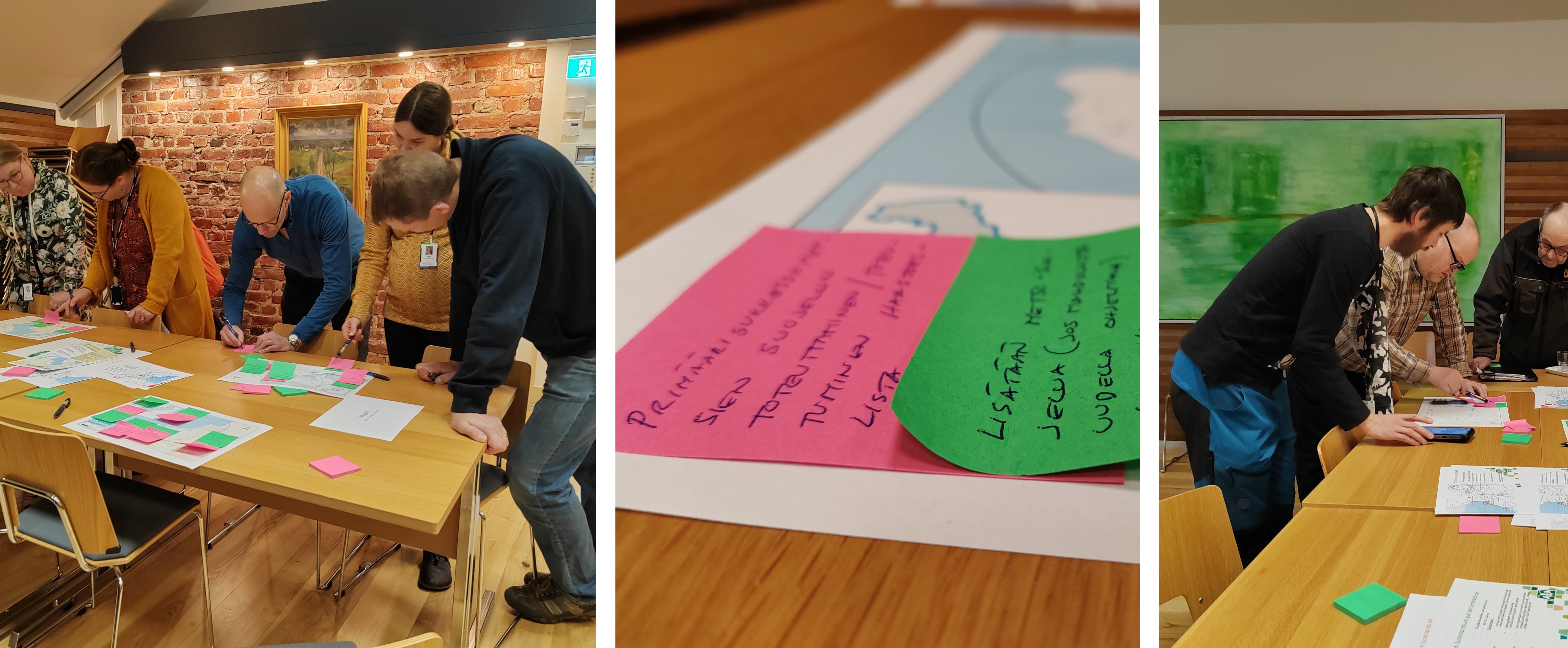
From 2026 onwards, following the reform of the state regional administration, responsibility for regional LUMO programs will be transferred to the new regional Economic Development Centres. The scope of the LUMO-work will expand, and regional biodiversity will be considered more comprehensively rather than focusing solely on biodiversity hotspots.
The partner organisations of Priodiversity LIFE, including the Finnish Environment Institute, the Natural Resources Institute Finland and the Finnish Forest Centre, will produce supplementary analyses for the programs. These analyses will provide important information on topics such as habitats and species of regional responsibility, ecological networks, the targeting of water protection measures and carbon sequestration.
Additional support for the LUMO program process will be provided through joint procurement of consulting and facilitation services by the Economic Development Centres. This will enable more coordinated and professional stakeholder participation through numerous regional and national workshops and other events.
Background of the LUMO programs
- Finland’s second National Biodiversity Strategy was implemented for the years 2012–2020. Its aim was to promote biodiversity and the ecologically, economically, socially and culturally sustainable use of natural resources. The evaluation of the strategy in 2020 concluded that the objectives had only been partially achieved. The evaluation recommended, among other things, the preparation of regional voluntary biodiversity programs as part of the next national biodiversity strategy.
- The Finnish Nature Conservation Act, renewed in 2023, enables the preparation of regional biodiversity action plans (LUMO programs). Responsibility for the task is assigned by law to the regional Economic Development Centres. Interaction with key regional stakeholders must be ensured during program preparation. The planning, implementation and monitoring of the programs must be based on the best available scientific knowledge. In addition, LUMO programs should take into account plans prepared under the Finnish Climate Act.
- LUMO programs implement the national biodiversity strategy at the regional level. Their contents may vary between regions, allowing each region to prepare its program according to its own needs and resources.
Jussi Jyväsjärvi, Biodiversity Coordinator, Economic Development Centre of Northern Finland
Priodiversity LIFE offers solutions to halt nature loss. The project gathers a wide range of committed operators who together have the chance to find the most impactful and cost-efficient ways to stop nature loss in Finland. In the project we will create requirements to make halting the nature loss into a new skill for Finnish entrepreneurs, and to make Finland an expert on international scale. Priodiversity LIFE is coordinated by Metsähallitus Parks and Wildlife Finland.
Priodiversity LIFE – for halting biodiversity loss (metsa.fi)
