Municipalities and citizens: Standing up for pollinators
This text was published in the blog of Priodiversity LIFE. Check out the other blog posts as well (metsa.fi).
11.5.2026
The Finnish Association for Nature Conservation promotes wild pollinators in built environments through the Priodiversity LIFE project. In this blog post, Titta Vikstedt, Project Manager at the Finnish Association for Nature Conservation, examines her home town through the eyes of a pollinator and dreams of pollinator-friendly municipalities.
A Meadow on the Edge of the City Disappears
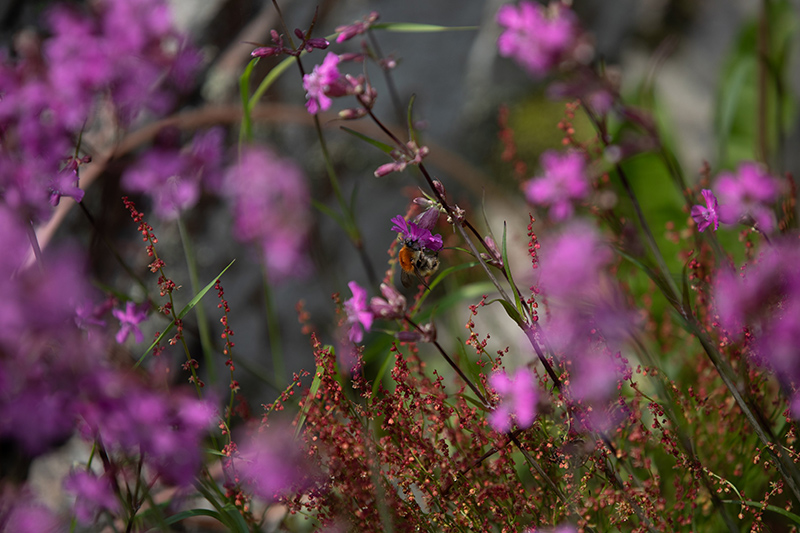
It is the beginning of June 2025. I am standing on the edge of the central urban area of my hometown, Lieto, watching a brown-banded carder bee (Bombus humilis) busily working on the sticky catchflies (Viscaria vulgaris) bordering the road. I lift my gaze to the trees behind the meadow. The landscape features handsome junipers and old pines. The floor of the forest islet has become overgrown with tall grass.
I continue my journey by bicycle, passing through a residential area consisting mainly of detached houses built in the 2000s. I see vast lawns, robotic lawnmowers, thuja hedges, and lupines running wild on the roadsides. I am delighted to see a man in his thirties tackling a growth of lupines.
I return home, open my computer, and study old aerial photographs. As recently as 1939 and 1963, the meadow and the forest islet I stopped to look at during my bike ride were semi-open. Back then, livestock from the neighboring farm surely grazed there. Based on aerial photos, by 1995 the area had started to become overgrown.
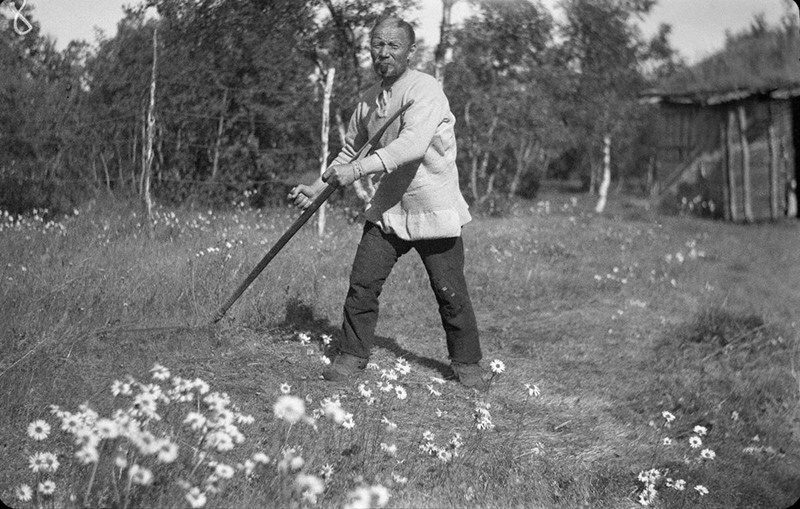
I find myself reflecting on how our relationship with the surrounding landscape has changed. Before fuel-powered agricultural machinery, industrial fertilizers, and fodder grain became common, we were dependent on the nature around us. Nothing was wasted; even yards were grazed and mowed. In those days, nutrients circulated locally from yards, meadows, and pastures through livestock and onto the fields. This benefited meadow species: wildflowers, butterflies, and other insects that thrive best in nutrient-poor and sunny conditions.
300,000 Hectares of Untapped Potential
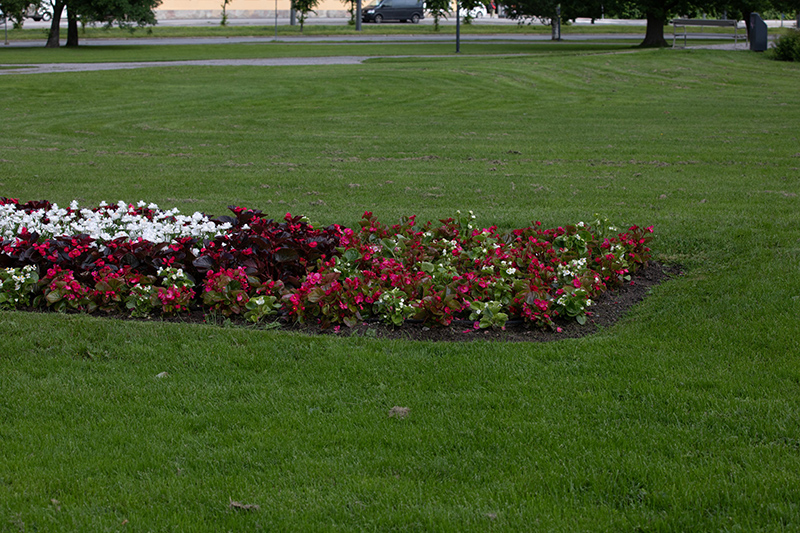
Currently, just over 30,000 hectares of old meadows and other traditional rural biotopes are under management in FInland. Their surface area has collapsed by an estimated 90% compared to the 1960s. It is no wonder that all our traditional biotopes are endangered. All that remains are small, isolated patches where meadow species struggle to survive under the threat of overgrowth and, sometimes, construction. On the other hand, we have plenty of backyards, parks, and other open green areas managed by citizens and municipalities. These areas constitute an estimated 300,000 hectares. Instead of meadows, we now have seeded lawns; instead of column junipers, we have thujas; instead of grazing livestock, we have robotic mowers; and instead of harebell flowers, we have lupine jungles.
Although the current situation is depressing, the “world-changer” in me believes in a more beautiful tomorrow. What potential lies within those 300,000 hectares if we only take action!
I imagine a hometown that would recognize the value of traditional biotopes on its land as part of its cultural heritage and landscape, investing in their care and maintenance in the same way it does for conventional parks. A city that would see the green-underside blue butterfly (Glaucopsyche alexis) or the ortolan bunting (Emberiza hortulana) as residents just as much as humans. A city that would plan its zoning with respect for nature and build in a way that increases biodiversity; for example, by requiring the preservation, planting, and sowing of local wild plants in its building guidelines.
I also dream of cities that would prioritize the intensive mowing of only lupines along roadsides while letting the mowing of wild plants wait until late summer. These cities would also let unused lawn areas bloom or turn into meadows, managing them by scything or only infrequent mowing. When these cities construct, they would forget about establishing new lawns: they would leave the edges of new thoroughfares without topsoil and sow the seeds of local wild plants into their sandy and crushed-stone shoulders. And how wonderful it would be to live in a neighborhood that also cherished local wild plants in its own yards and fought back against lupines together.
There are plenty of ways to improve the quality and increase the area of municipal meadow networks! You can find more ideas and information on the Finnish Association for Nature Conservation’s “Defend Pollinators” tip page for municipalities (in Finnish, sll.fi). For ideas on plant choices for your own yard, you can consult our Pollinator Plant Guide (in Finnish, sll.fi).
Titta Vikstedt, Project manager, The Finnish Association for Nature Conservation
Priodiversity LIFE offers solutions to halt nature loss. The project gathers a wide range of committed operators who together have the chance to find the most impactful and cost-efficient ways to stop nature loss in Finland. In the project we will create requirements to make halting the nature loss into a new skill for Finnish entrepreneurs, and to make Finland an expert on international scale. Priodiversity LIFE is coordinated by Metsähallitus Parks and Wildlife Finland.
Priodiversity LIFE – for halting biodiversity loss (metsa.fi)
