Industrial harbour areas are habitats for many birds – Priodiversity LIFE is piloting solutions for the living conditions of breeding birds
This text was published in the blog of Priodiversity LIFE. Check out the other blog posts as well (metsa.fi).
6.3.2026
Industrial harbour areas are generally not known for biodiversity, but they may actually be important habitats for many species. A pilot in Priodiversity LIFE project executed in Oulu (a city in North Ostrobothnia, Finland), is developing and evaluating practices that safeguard the living conditions for birdlife in harbour and industrial areas in active use and creating an operating model for similar environments. This work benefits many species, such as the Common ringed plover, the Eurasian oystercatcher and the Common redshank.
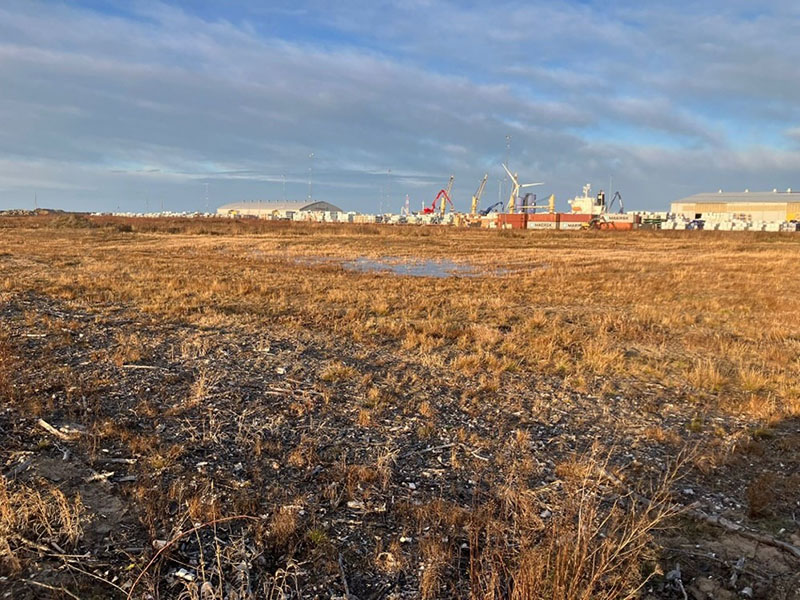
In Priodiversity LIFE project, we execute a pilot in collaboration with industrial operators to improve the biodiversity in industrial areas from 2025 to 2029. The pilot area is located in the city of Oulu, where there has been a wide-based working group for birds in industrial areas for 20 years already. The working group consists of all the key operators from the city harbour and nearby industrial areas: Port of Oulu and other necessary administrative services and business companies of the city, as well as Economic Development Centre of North Finland, and the Ornithological Association of North Ostrobothnia.
The activities of the working group started with the initiative of the Ornithological Association of North Ostrobothnia. For many years several endangered bird species have been breeding in the Oulu harbour area and nearby industrial areas. Many of these bird species are of high conservation value, so to safeguard the nesting and retaining the populations, closer communication, interaction and guidance regarding human activities in the nesting area was needed between different operators.
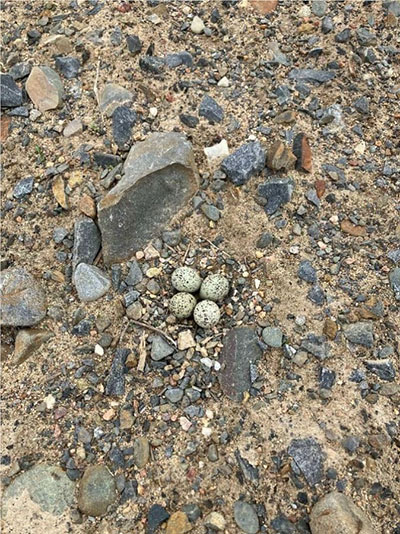
The goals of this industrial pilot can be divided into two parts. On one hand, we improve the state of nesting places located on the open fields by restoring and managing them; we clear wood and bushes, mow the vegetation and remove the soil and roots with milling machines. These management actions profit many species nesting on open areas, such as the Common ringed plover, Eurasian oystercatcher, Common redshank, and gulls and terns.
On the open nesting fields, the goals to benefit birdlife might differ from other biodiversity-improving goals, because the fields must be as plantless as possible, or have a very low-growth vegetation. The soil in these sites should be such that plants cannot easily root themselves in and grow. One example of a harmful plant species is white clover, which is common in Oulu harbour area. It spreads easily from one place to another and fills suitable nesting environments quickly.
It’s also important to pay attention to reducing the number of invasive predator species, i.e. American mink and Raccoon dog. Terns, for instance, have mostly vanished from the pilot area, likely due to the invasive predators. Hunting them, however, is challenging in active industrial and harbour areas, as there are people and heavy vehicles around. The effectiveness of management actions is monitored by bird inventories, which have been done for the rarest species for a couple of decades in the area.
Developing operating model for considering birdlife
The second part of the pilot is creating a common operating model for considering birdlife in industrial areas and other similar habitats. The foundation for the procedure is the meeting notes, plans and action plans of long history of the working group for birds in industrial areas of Oulu.
We are also planning a survey for the members of the working group, to evaluate the past experiences by the members, as well as to ask for suggestions for improving the activities. Depending on opportunities, the operating model can include experiences about retaining biodiversity in industrial areas from other similar areas in Finland. In Kemi, for example, Metsä Group is doing wide range of actions to improve biodiversity.
Industrial areas with human activity have many challenges that other environments do not have. The establishment of permanent protected sites do not usually suit these areas. The plans for conservation purposes should be flexible, taking the requirements of different organisms into account goal-oriented and proactively. Land use planning might also have its own significant role.
Sami Timonen, Regional coordinator, Economic Development Centre of North Finland
Priodiversity LIFE offers solutions to halt nature loss. The project gathers a wide range of committed operators who together have the chance to find the most impactful and cost-efficient ways to stop nature loss in Finland. In the project we will create requirements to make halting the nature loss into a new skill for Finnish entrepreneurs, and to make Finland an expert on international scale. Priodiversity LIFE is coordinated by Metsähallitus Parks and Wildlife Finland.
Priodiversity LIFE – for halting biodiversity loss (metsa.fi)
