Boosting the mowing management of semi-natural grasslands by co-operation and contracting
This text was published in the blog of Priodiversity LIFE. Check out the other blog posts as well (metsa.fi).
10.2.2026
During the past two summers we have been busy with testing large-scale mowing management in the river valleys of Salo and Somero, Southwest Finland. Steep and uneven grasslands on riverbanks are challenging to manage but seeing the results and the landscape opening up again is rewarding. This pilot work, called ‘Reintroducing hay-cutting in overgrown hay-meadows with economically feasible methods’, is a joint effort of WWF Finland and the Economic Development Centre of Southwest Finland in Priodiversity LIFE.
Traditional rural biotopes, such as different types of meadows and natural pastures are biodiversity hotspots in Finland. Both the habitat types themselves and many species living in them are endangered. These biotopes have been formed and sustained over centuries, by the hay-cutting and grazing practices of traditional livestock farming. Preventing overgrowth by tall vegetation and shrubs – and thus promoting species richness – requires active work.
Grazing or hay-cutting? Both are needed
Most traditional rural biotopes under management are currently being grazed. The dung produced by the cattle is important for many insects and therefore for insectivorous birds, such as swallows, which have become endangered. Overall, grazing is an irreplaceable grassland management method.
However, grazing is not always possible. This might be due to several reasons, such as the lack of grazing animals, land-ownership issues or predator pressure. Furthermore, putting up pasture fences e.g. in small or isolated sites might be challenging and the economic profitability of grazing in such sites low.
Grazing and hay-cutting have some differing ecological effects. Hay-cutting removes all the vegetation at once, while cattle easily leave undesirable plants uneaten. Furthermore, the Natura 2000 habitat types include “Lowland hay meadows”, which should be managed by mowing particularly. This habitat type is a criterion for conservation for instance in the Rekijokilaakso river Natura 2000 area, where some of the pilot’s sites are located. The Clouded Apollo, a vulnerable (VU) butterfly species lives in the area.
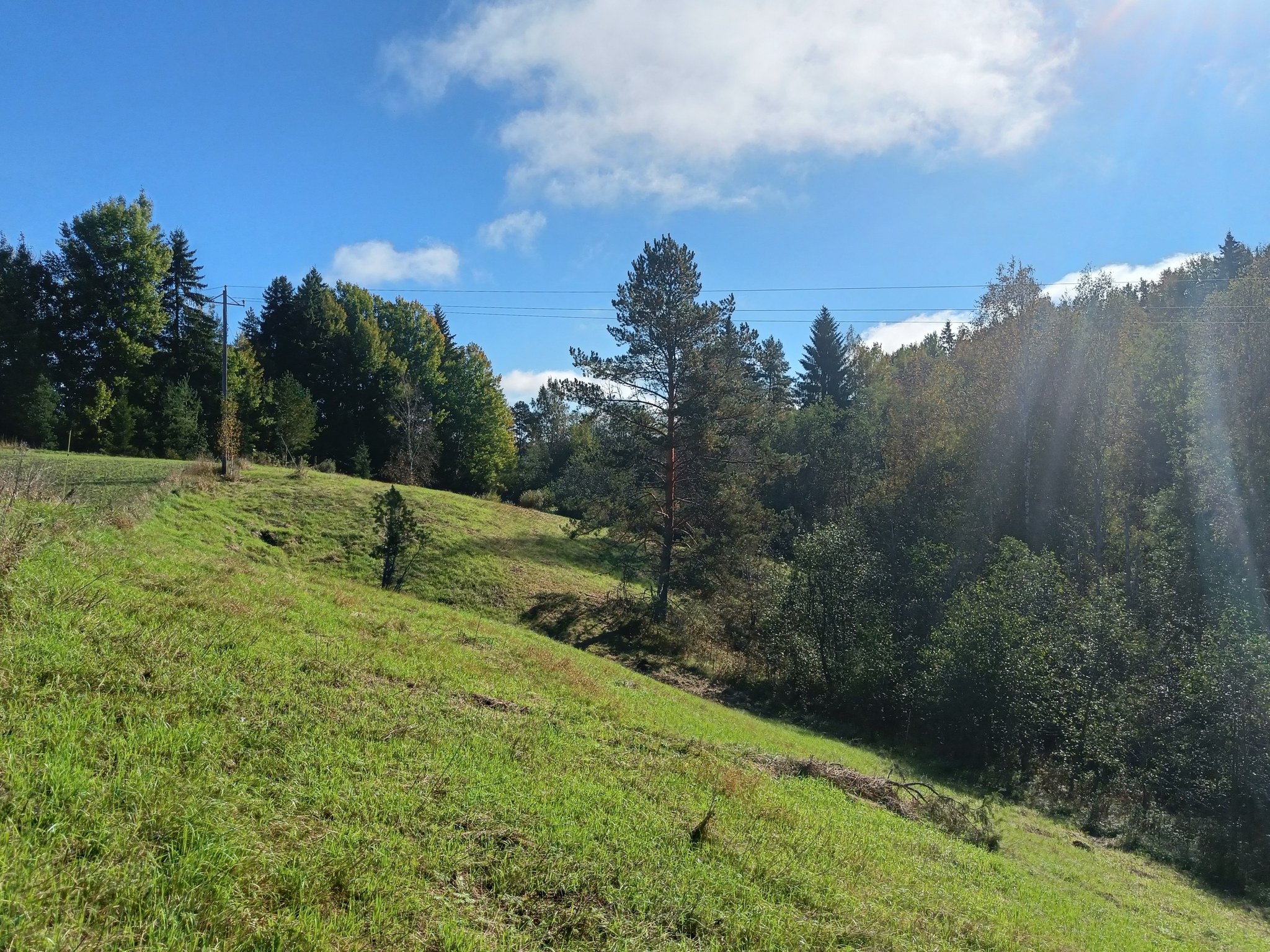
The entire chain of mowing work examined
Both grazing and hay-cutting need to be expanded in Finland. The latter is currently typically based on small-scale voluntary work. In our mowing pilot we aim to gain practical experience of the entire chain of larger-scale hay-cutting; from searching suitable sites and contacting landowners to the practical work (including tendering contractors) and the utilization of mowing residue. Gathering knowledge about the costs and bottlenecks in the action chain is a vital part of the pilot. In addition, we have strived to improve the grassland restoration know-how of contractors. A special course was provided at a local vocational college (Livia College), also as part of Priodiversity LIFE.
The pilot is carried out at 12 sites, 2 in Somero and 10 in Salo. One of the Salo meadows is owned by the municipality and another one by the local parish (the Pertteli church meadow). The rest of the meadows are privately owned. Reactions by landowners have been mainly positive, and the co-operation with the municipality and the parish has been very smooth. A good option for disseminating the operational model would thus be to widen such work with public organizations elsewhere in Finland.
When communicating with landowners, it is important to discuss passage routes to the meadows in good time. Transporting vehicles and removing heavy loads of mowing residue can be challenging when working next to cultivated fields.
Further funding and possibilities for mowing residue use under consideration
The practical mowing work has now been tendered twice. In summer 2024 we got only one offer, as the tenders were put out late in the season. The larger-scale work in summer 2025 was tendered as four different packages, and we got three offers. From these we chose two contractors based on prices. The other of these is delightfully an entrepreneur who completed the course by Livia, mentioned above.
Contractor work with mowing machinery is, understandably, not cheap. It is challenging to work in steep and uneven river ravines. In lush sites, mowing residue is abundant and harvesting and transporting it away is time-consuming. Priodiversity LIFE offered a kick-start for the restoration of these sites, and the following funding and management possibilities are now being discussed.
We are also exploring options for the utilization of mowing residue, which has been taken to the waste station during the first two summers. However, analyses made from two pilot sites show that the digestible raw protein and sugars of the residue are on a very good level considering hobby horse fodder, for example. The operational model of our pilot offers several possibilities, from employing contractors to developing domestic fodder options.
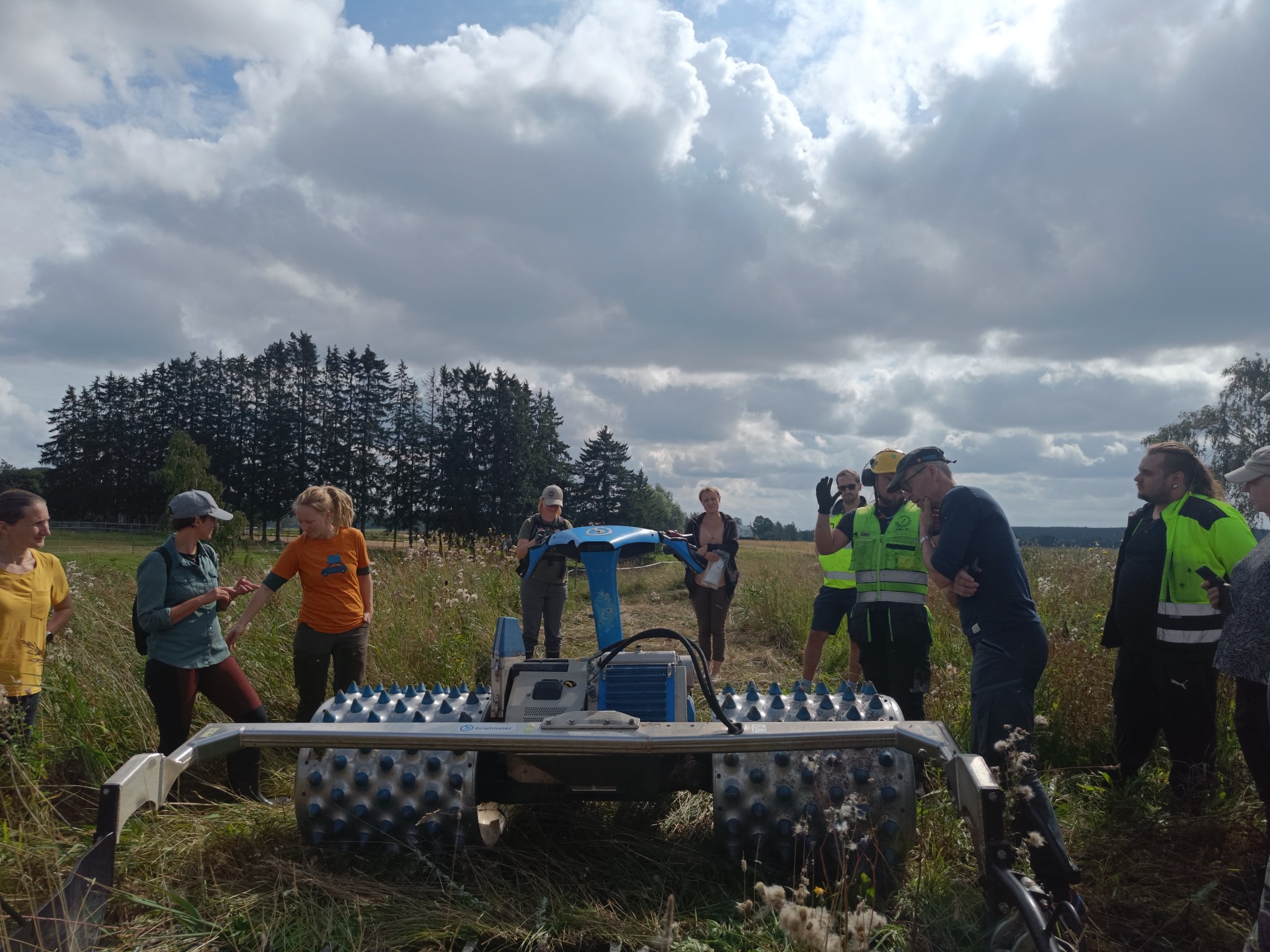
Eeva-Liisa Korpela, Conservation Officer, WWF Finland
Priodiversity LIFE offers solutions to halt nature loss. The project gathers a wide range of committed operators who together have the chance to find the most impactful and cost-efficient ways to stop nature loss in Finland. In the project we will create requirements to make halting the nature loss into a new skill for Finnish entrepreneurs, and to make Finland an expert on international scale. Priodiversity LIFE is coordinated by Metsähallitus Parks and Wildlife Finland.
Priodiversity LIFE – for halting biodiversity loss (metsa.fi)
