Metsähallitus will begin enhanced supervision at popular recreation sites in March to clarify cooperation agreement practices and prevent unauthorized tourism activities. Tourism operators bringing customers to protected areas are required to have a cooperation agreement, but some operators are still unfamiliar with the practice, and some do not follow it. The purpose of the supervision visits is to provide information about cooperation and contractual practices, whose fundamental aim is to ensure ecological sustainability, visitor safety and the smooth shared use of recreation sites.
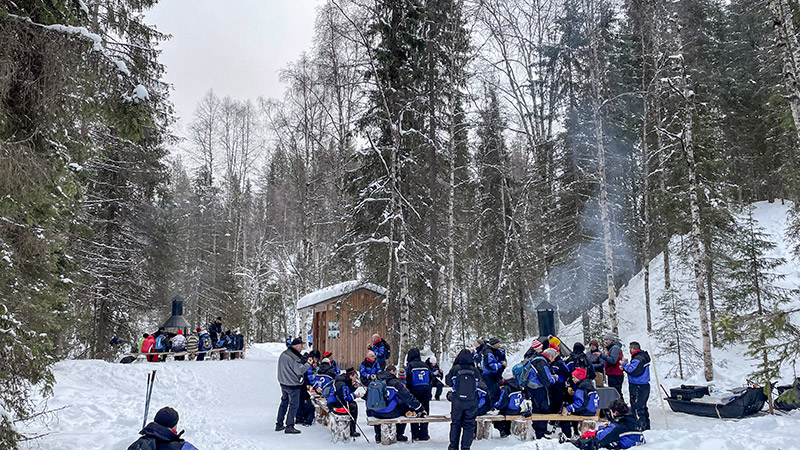
Tourism operations on state-owned protected areas require a cooperation agreement with Metsähallitus Parks and Wildlife. If a company uses hiking trails, rest spots or other recreational infrastructure on Metsähallitus-managed areas, it must pay an annual use fee based on customer numbers. The collection of use fees is based on legislation.
At the end of 2025, Metsähallitus Parks and Wildlife Finland had 730 tourism cooperation entrepreneurs. Two thirds of them bring customers to Metsähallitus-managed areas, for example on guided tours. One third provides nature-based tourism services, such as restaurant and accommodation services, near national parks and hiking trails.
“Tourism business activities on our areas are strongly concentrated in Northern Finland around rapidly growing tourism centres. The highest number of tourism cooperation agreements is in Pallas–Yllästunturi National Park (113), and nine of the ten most heavily visited sites by companies are located in the north,” says Katja Blomberg, Senior Specialist, Recreational Amenities at Metsähallitus Parks and Wildlife.
Protected or recreation area – Number of companies
- Pallas–Yllästunturi National Park – 113
- Käsivarsi Wilderness Area – 94
- Urho Kekkonen National Park – 75
- Nuuksio National Park – 74
- Oulanka National Park – 55
- Korouoma Canyon – 54
- Riisitunturi National Park – 53
- Kilpisjärvi Wilderness Area – 49
- Lemmenjoki National Park – 42
- Pyhä–Luosto National Park – 40
(Cooperation agreement statistics as per 31 Dec 2025)
Rest spots are shared by everyone
Balancing the needs of different user groups is important, as recreation sites serve both domestic and international tourism operators’ customer groups as well as independent visitors. At popular sites, the number of groups brought by tourism companies has increased, and challenges related to ecological and social sustainability, cultural differences and safety have emerged.
A cooperation agreement entitles tourism operators to use Metsähallitus maintained infrastructure, such as rest spots. However, rest spots are shared by all visitors, and during peak times their smooth shared use requires consideration from all parties. Encounters between different user groups can enrich outdoor experience and increase understanding of different ways of enjoying nature.
Targeted supervision visits begin in Northeast Finland
Metsähallitus will carry out targeted supervision visits at popular recreation sites during the late winter in cooperation with Wilderness supervision. The first supervision days will take place in March at sites in Northern Finland and Lapland.
Supervision visits are conducted to meet tourism operators in their work environment and ensure that cooperation agreements and access rights are up to date. At the same time, guidance can be provided, questions answered and rules of the areas clarified. During the visits, it is checked whether the tourism operator has a valid cooperation agreement. If the agreement is missing, the company is guided to join the cooperation. If a company does not wish to enter into an agreement or pay the use fee, its group may not be allowed access to the recreation site.
Sustainable tourism supports local wellbeing, strengthens appreciation of nature and reduces environmental impact
The primary goal of tourism cooperation is to ensure the sustainability of tourism and the preservation of the area’s natural and cultural values.
The principles of sustainable tourism aim to support the conservation and strengthening of the values of nature sites, minimize environmental impact, strengthen local identity, promote wellbeing and health benefits produced by the sites, support local economic growth and job creation, and communicate jointly about the values and services of the site.
Further information
- Katja Blomberg, Senior Specialist, Recreational Amenities, Metsähallitus Parks and Wildlife, tel. 040 624 2104
- Eeva Pulkkinen, Senior Specialist, Recreational Amenities, Metsähallitus Parks and Wildlife, tel. 040 576 8603
Tourism cooperation online
- Tourism services on protected areas
- Apply to become a tourism cooperation entrepreneur (form, link.webropolsurveys.com)
- Sustainable tourism on protected areas – Guide for Metsähallitus’ tourism partners (storymaps.arcgis.com)
Videos on social media